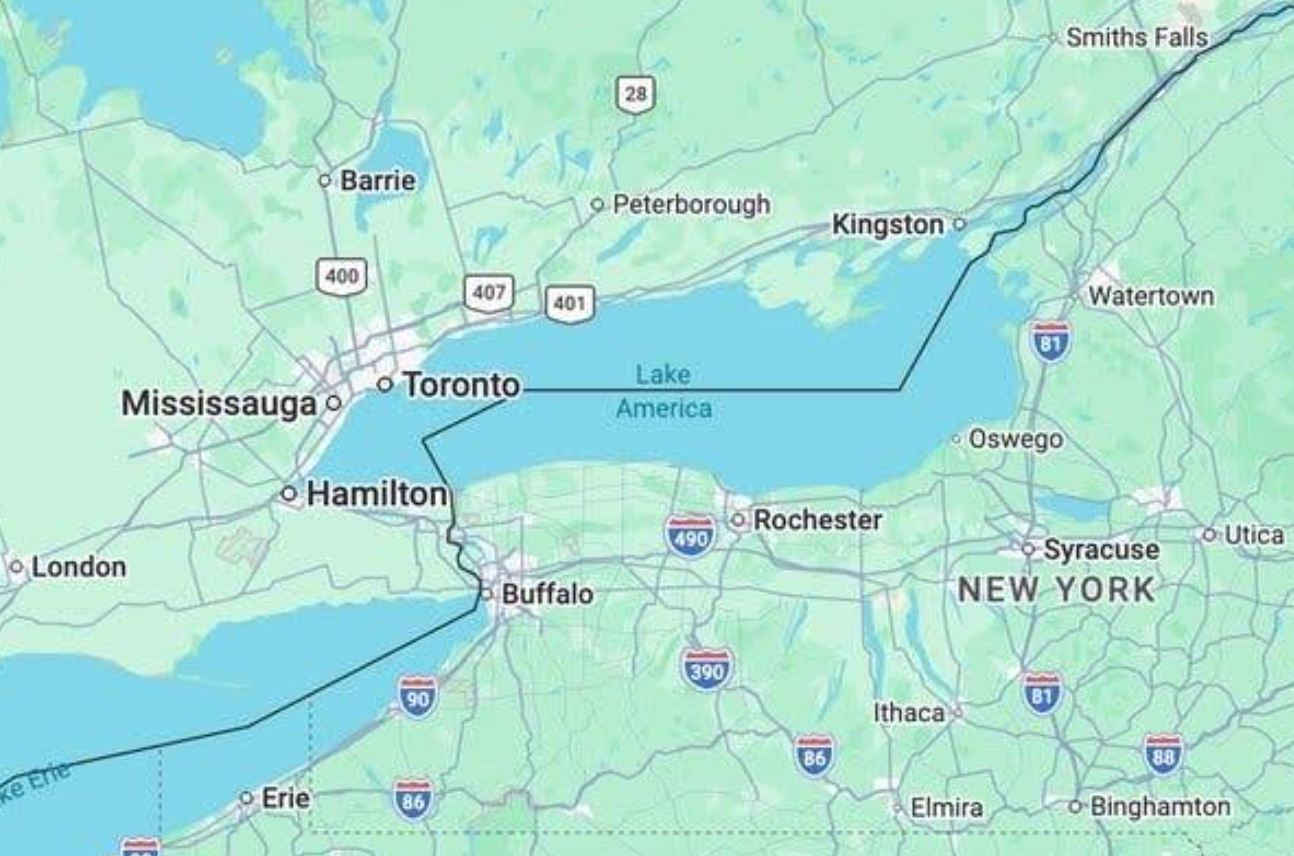
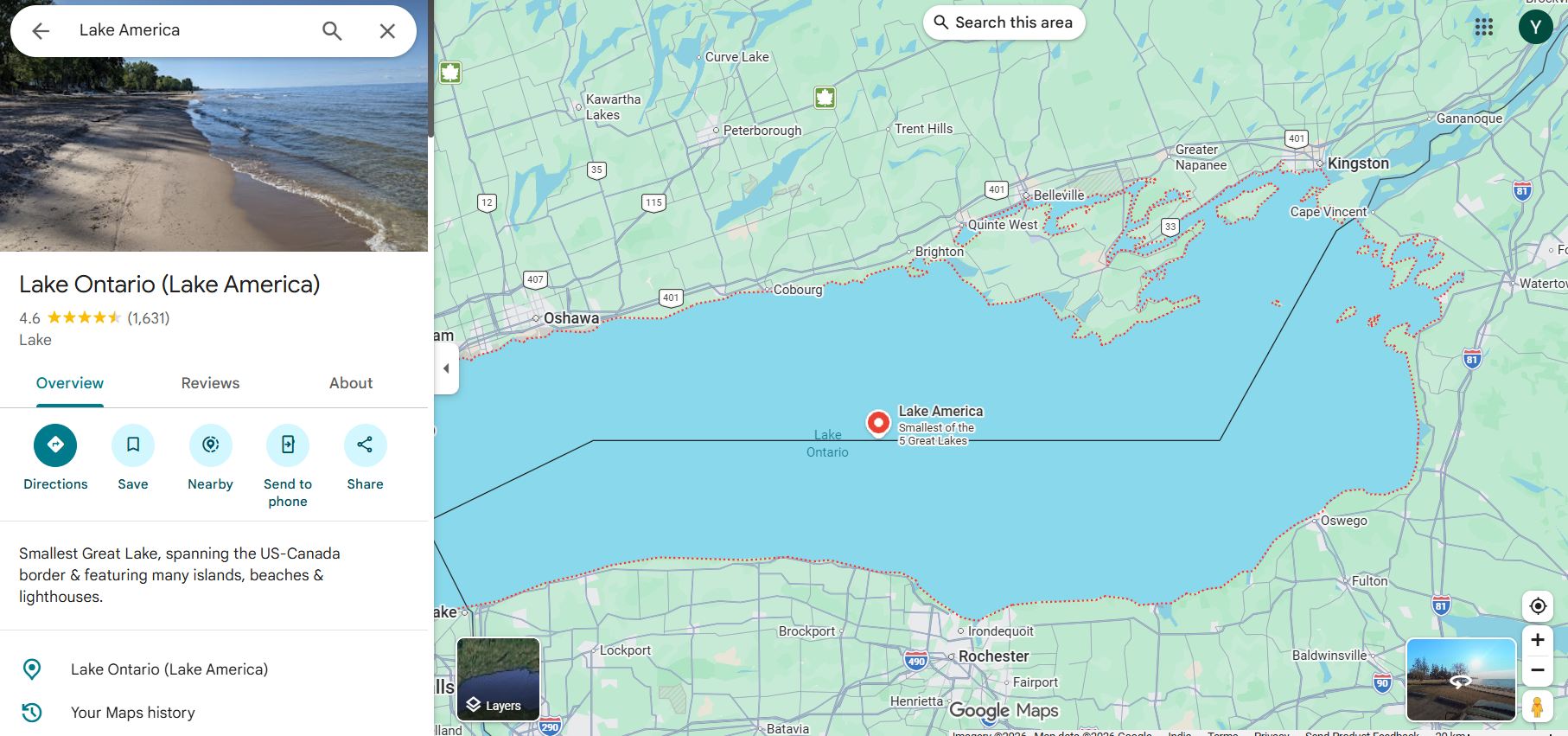
Google Maps has begun displaying “Lake America” instead of Lake Ontario for users located in the United States, following an executive order signed by President Donald Trump directing federal agencies to rename the Great Lake. The change has quickly sparked political debate, public reaction, and renewed discussion about the role of technology companies in adopting government-issued geographic names.
On August 30, 2026, Google confirmed that it had started rolling out updates to Google Maps after the U.S. Geographic Names Information System (GNIS) officially adopted the new name under Trump's executive order. As a result:
Google stated that the update follows its longstanding policy of reflecting place names based on official government geographic databases in each region.
The executive order came amid escalating trade tensions between the United States and Canada. President Trump announced the change as part of a broader political message emphasizing American sovereignty and influence. The order instructed the Department of the Interior and the U.S. Board on Geographic Names to update federal records accordingly.
The move follows a similar action earlier in Trump's presidency, when federal agencies adopted the name “Gulf of America” in place of the Gulf of Mexico for certain U.S. government references.
Canadian leaders were quick to reject the change.
Prime Minister Mark Carney stated that the lake's name has existed for more than 400 years and originates from the Wendat language. He emphasized that Canada will continue referring to the body of water as Lake Ontario, regardless of changes made by the U.S. government.
Other Canadian officials and provincial leaders have also criticized the decision, arguing that a unilateral U.S. order cannot alter the lake's historical and international identity.
Google says it does not independently decide official geographic names. Instead, the company updates Maps when authoritative government sources change their designations.
Because the U.S. GNIS database now lists the lake as “Lake America,” Google implemented the update for American users while maintaining region-specific labeling for Canadian users.
This approach mirrors Google's handling of disputed or differently named geographic locations around the world.
The renaming has generated intense discussion across social media and news platforms. Supporters view it as a symbolic assertion of American identity, while critics argue that changing the name of a shared international water body creates unnecessary confusion and undermines historical naming conventions.
The debate also highlights the growing influence of major technology platforms in shaping how people perceive maps, borders, and geographic terminology. When companies such as Google update labels based on government directives, those decisions can instantly affect millions of users worldwide.
Looking Ahead
While Google Maps has already adopted the new label for U.S. users, not all mapping services have followed suit. Some platforms continue displaying Lake Ontario, and the long-term acceptance of the new name remains uncertain, particularly outside the United States.
For now, one thing is clear: the historic Great Lake now appears under two different names depending on where users access Google Maps, ensuring that the debate over Lake Ontario versus Lake America is far from over.
Source: Google Maps announcement, U.S. Geographic Names Information System updates, and reporting from CBS News, Forbes, and other major outlets.














Explore the USA's most iconic attractions, from historic landmarks to breathtaking natural wonders.