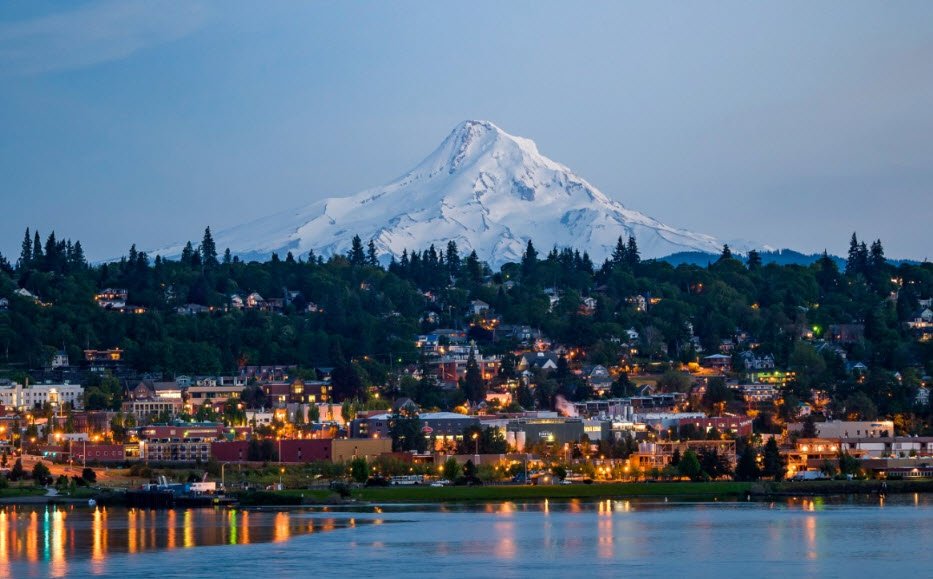
Hood River, a lively city of about 8,600 residents in northern Oregon's Hood River County, sits at the confluence of the Hood River and Columbia River in the dramatic Columbia River Gorge National Scenic Area, roughly 60 miles east of Portland and 30 miles north of snow-capped Mount Hood, Oregon's tallest peak.
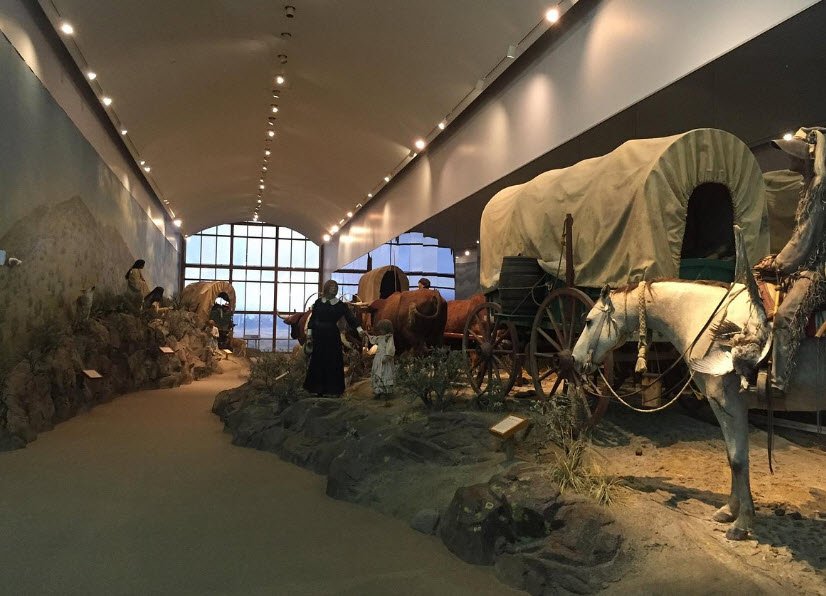
The National Historic Oregon Trail Interpretive Center, perched on 500 acres atop Flagstaff Hill six miles northeast of Baker City, Oregon, immerses visitors in the epic saga of 19th-century pioneers who traversed the 2,000-mile Oregon Trail from Missouri to the Willamette Valley, with exhibits on Native Americans, mountain men, natural history, mining, and settlement using life-size dioramas, multimedia shows, and living history demos in a 23,000-square-foot facility managed by the Bureau of Land Management.
Painted Hills, a stunning geologic formation spanning 3,132 acres in Wheeler County about 9 miles northwest of Mitchell in north-central Oregon's high desert, forms one of three units of John Day Fossil Beds National Monument with vividly layered bands of red, yellow, gold, black, and gray mudstone, shale, siltstone, and lignite revealing 35-28 million years of climate shifts from Eocene tropical wetlands to cooler Oligocene dryness.
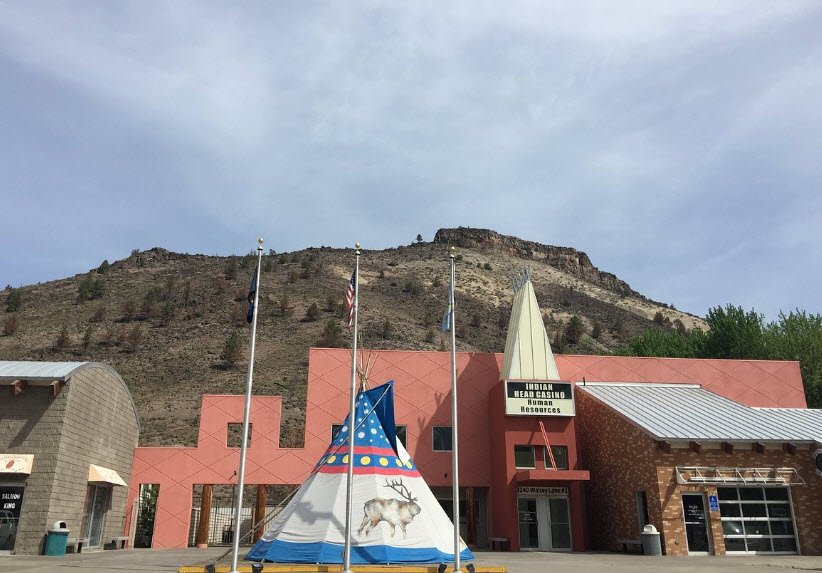
Indian Head Casino in Warm Springs, Oregon, is owned and operated by the Confederated Tribes of Warm Springs (Warm Springs, Wasco, and Paiute tribes) at 3236 Highway 26, designed to resemble historic fishing scaffolds at Celilo Falls for cultural significance and located across from the Museum at Warm Springs.
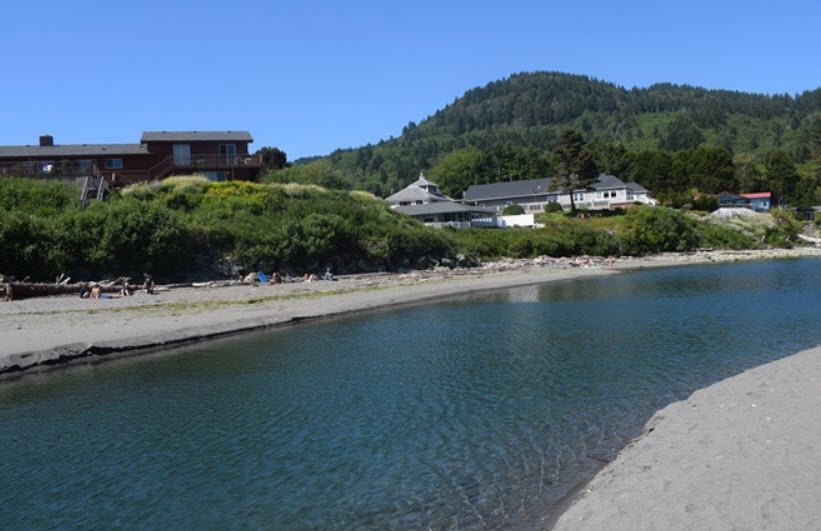
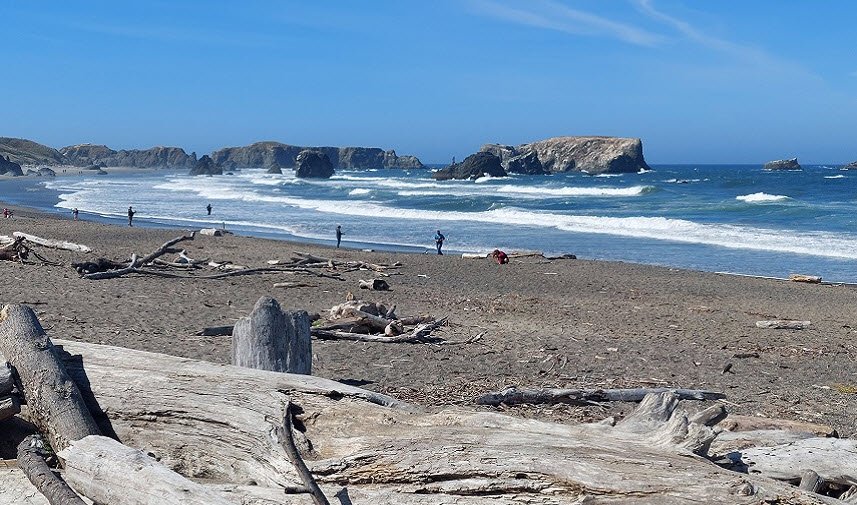
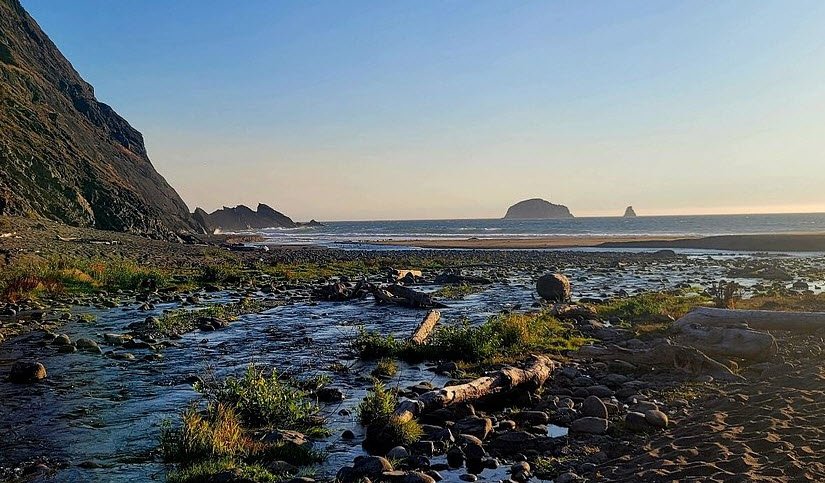
Winchuck State Recreation Site is a compact 6.8-acre day-use coastal park in Curry County, extreme southwestern Oregon, USA, just south of Brookings near the California border at the mouth of the Winchuck River.
The Grotto, officially the National Sanctuary of Our Sorrowful Mother, spans 62 acres atop and around a 110-foot basalt cliff on Rocky Butte in northeast Portland, Oregon, founded in 1924 by Servite friar Ambrose Mayer to fulfill a childhood vow after his mother's perilous childbirth, with construction carving a dramatic cave chapel housing a replica of Michelangelo's Pietà statue of Mary cradling Jesus.
South Jetty, part of South Beach State Park in Newport, Lincoln County, Oregon, USA, provides free day-use beach access just south of the Yaquina Bay jetties that protect the harbor entrance.
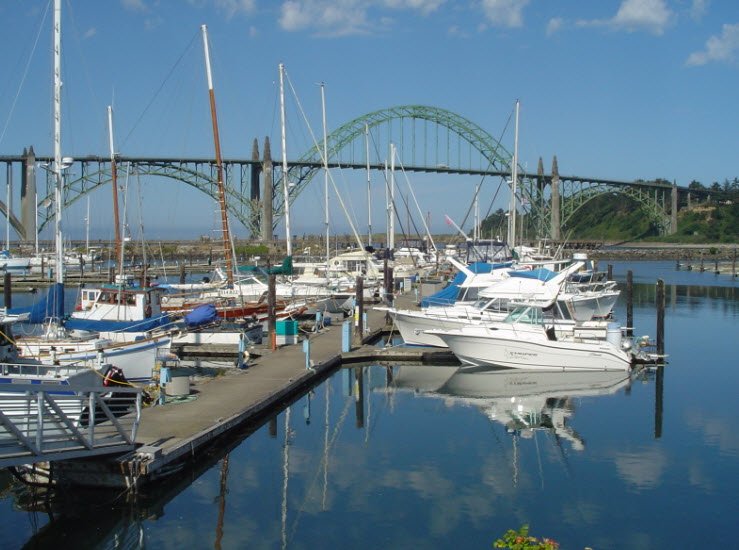
Newport, a coastal city in Lincoln County, Oregon, with about 10,000 residents, originated as home to the Yaquina (Yacona) people for over 3,000 years before white settlers arrived in the 1850s around Yaquina Bay, where Sam Case established the first resort in 1866, naming the town after Newport, Rhode Island, leading to its incorporation in 1882.
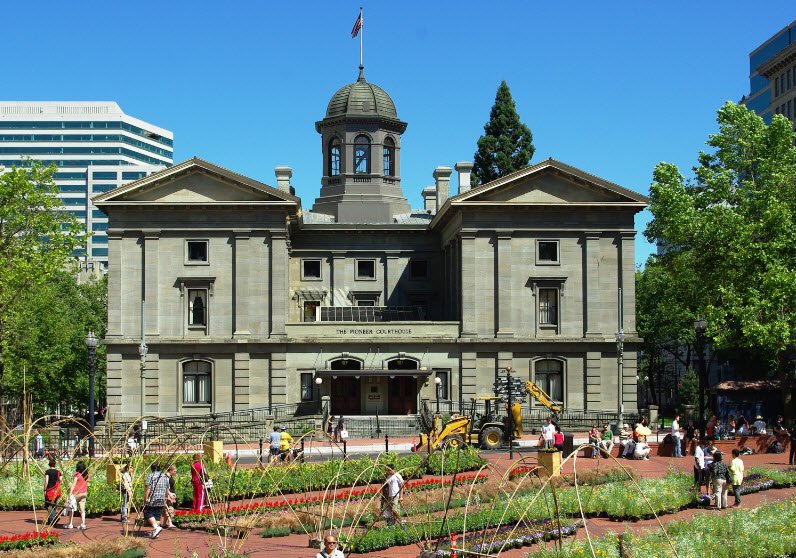
Pioneer Courthouse Square, Portland's beloved Living Room in the heart of downtown bounded by Yamhill, Morrison, 6th Avenue, and Broadway, opened on April 6, 1984, after a national design competition won by architect Will Martin, transforming a former parking lot site of the 1856 Central School and grand 1890 Portland Hotel into a 40,000-square-foot urban oasis drawing over 10 million visitors yearly.
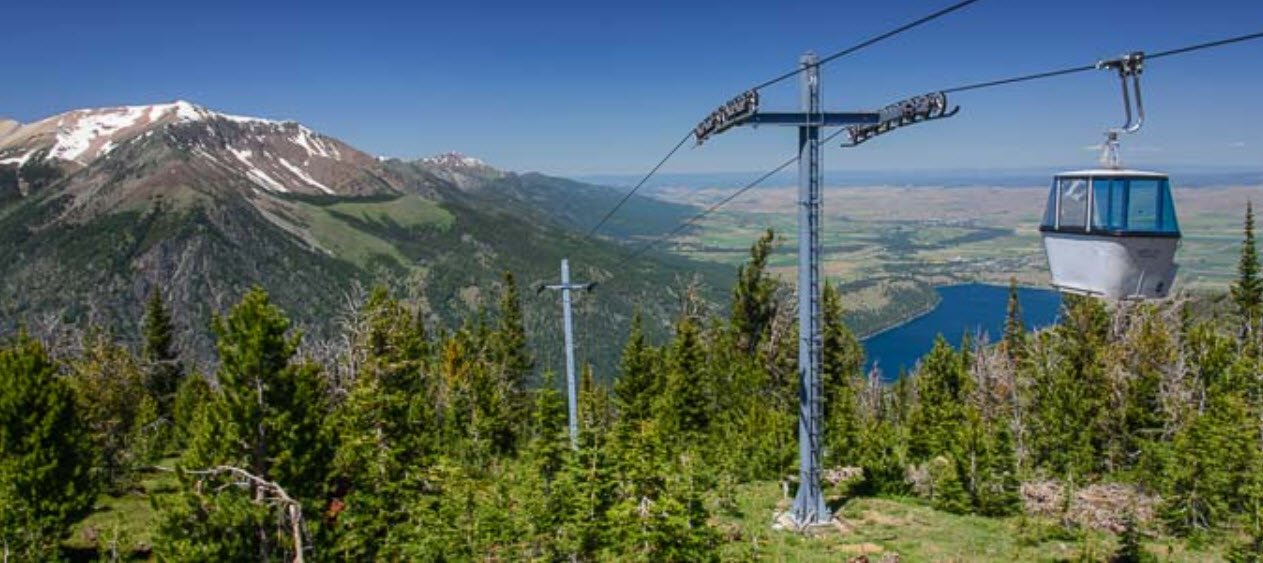
The Wallowa Lake Tramway, near Joseph in northeastern Oregon's Wallowa-Whitman National Forest, offers a thrilling 15-minute gondola ride in Swiss-made four-passenger cabins, climbing 3,700 feet from 4,450 feet at Wallowa Lake to the 8,150-foot summit of Mount Howard, making it North America's steepest vertical four-person gondola.
Tamástslikt Cultural Institute, a tribally owned museum and research center on the Umatilla Indian Reservation four miles east of Pendleton in eastern Oregon, opened in 1998 after a decade of advocacy sparked by the 1993 Oregon Trail sesquicentennial, telling the 10,000-year story of the Cayuse, Umatilla, and Walla Walla peoples through immersive permanent exhibits We Were, We Are, and We Will Be featuring artifacts, dioramas, multi-media, a recreated 1855 treaty council, and seasonal round displays in its 45,000-square-foot native stone and wood building.
Thor's Well, a captivating natural sinkhole dubbed the Drainpipe of the Pacific on Oregon's central coast in the Cape Perpetua Scenic Area within Siuslaw National Forest, sits about three miles south of Yachats off Highway 101 at Cook's Chasm, where waves crash into a roughly 20-foot-deep collapsed sea cave carved from ancient basalt rock, creating a dramatic vortex that fills and drains with ocean surges.
Multnomah Falls, located in Oregon's Columbia River Gorge about 30 miles east of Portland, is the tallest waterfall in the state, with a total height of 620 feet split into two major tiers—the upper falls dropping 542 feet and the lower falls 69 feet, with a small elevation drop between them.
Portland, Oregon's largest city with around 650,000 residents in a metro area exceeding 2.5 million, nestles between the Willamette and Columbia Rivers about 50 miles inland from the Pacific, founded in 1843 as The Clearing by pioneers William Overton and Asa Lovejoy on former Chinookan lands shaped by ice-age floods, officially named after a 1845 coin toss between Portland, Maine, and Boston, and incorporated in 1851 amid Oregon Trail arrivals.
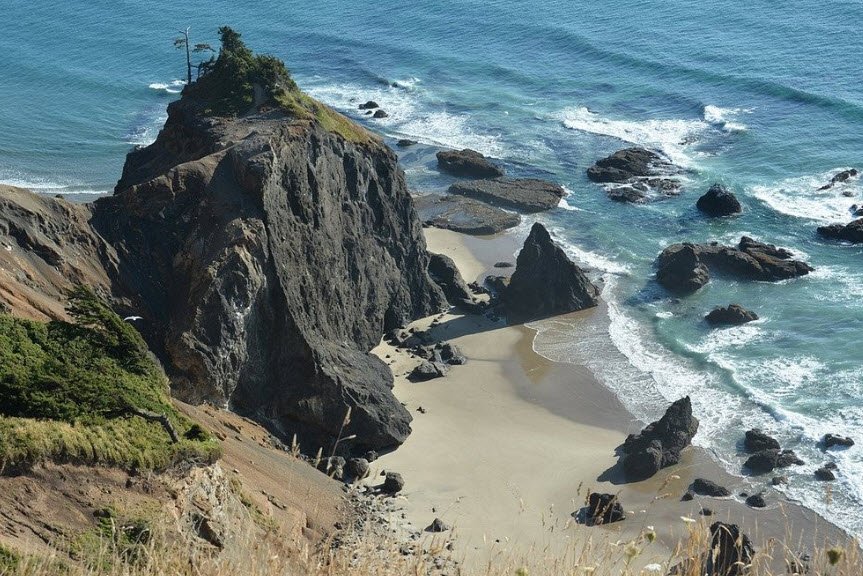
Roads End State Recreation Site is a coastal day-use state park at the northern end of Lincoln City in Lincoln County, Oregon, USA, administered by the Oregon Parks and Recreation Department and acquired between 1968 and 1971 through purchase and litigation to ensure public access to the Pacific shore.
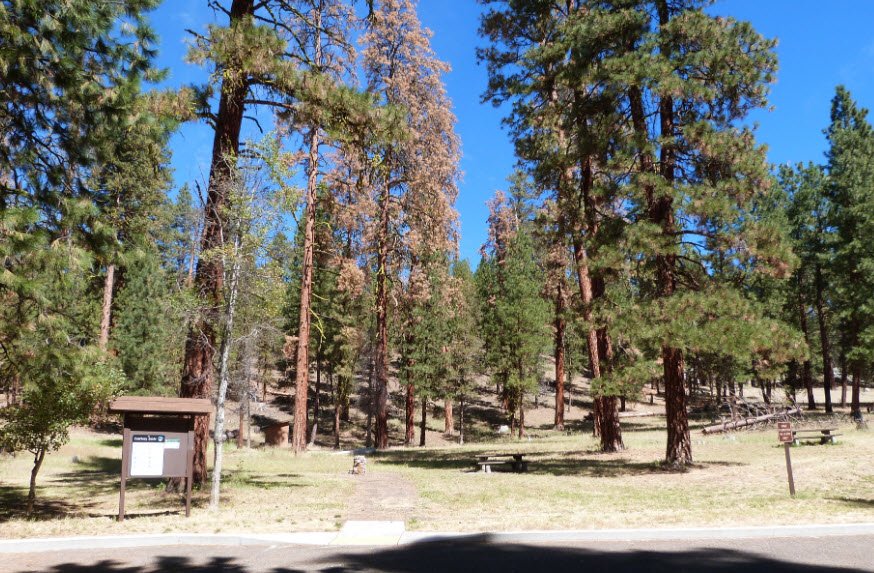
Booth State Scenic Corridor is a 319-acre day-use state park in Lake County, southern Oregon, USA, along Oregon Route 140 about 12 miles west of Lakeview in the Drews Gap area.
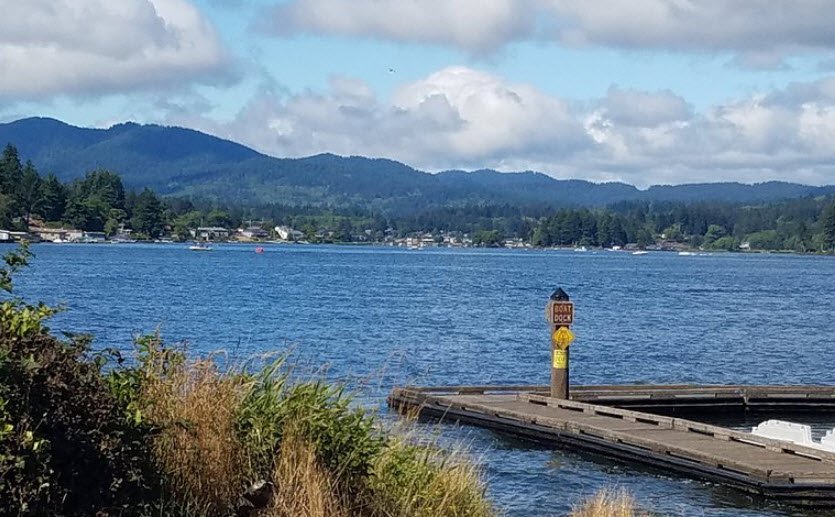
Devil's Lake State Recreation Area is a popular waterfront park in Lincoln City, Lincoln County, Oregon, USA, split into a west-shore campground and an east-shore day-use area around the serene 685-acre Devil's Lake, connected to the Pacific Ocean via the short D River.
Humbug Mountain State Park is a 1,842-acre coastal state park in Curry County, southern Oregon, USA, located six miles south of Port Orford along U.S. Route 101.