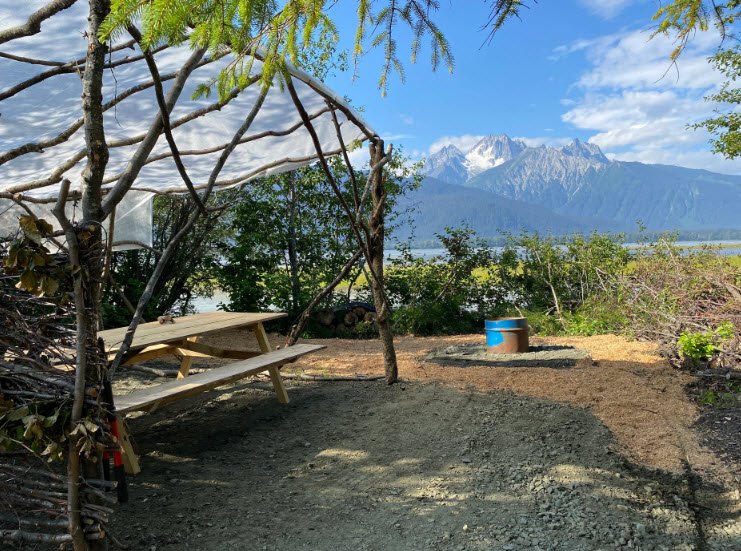
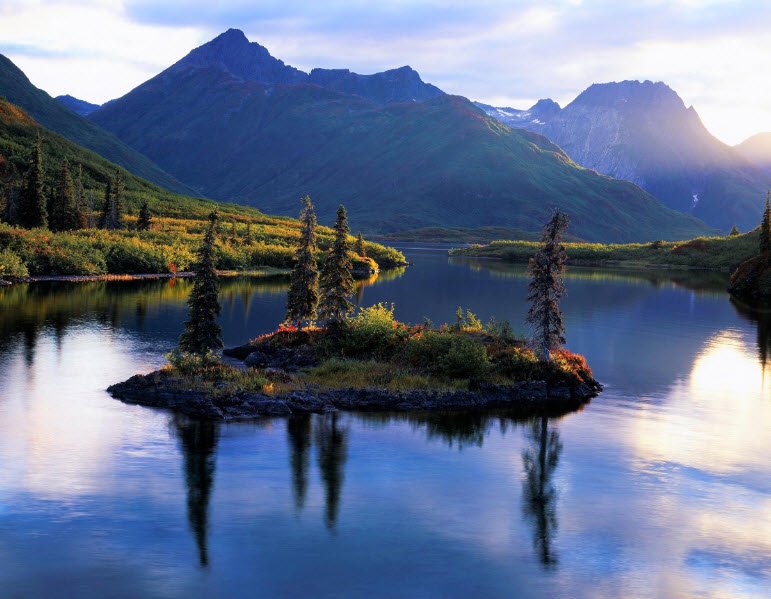
Glacier Bay National Park and Preserve in Alaska is a vast wilderness area covering over 5,100 square miles, known for its dramatic tidewater glaciers, towering mountains, deep fjords, and rich ecosystems.
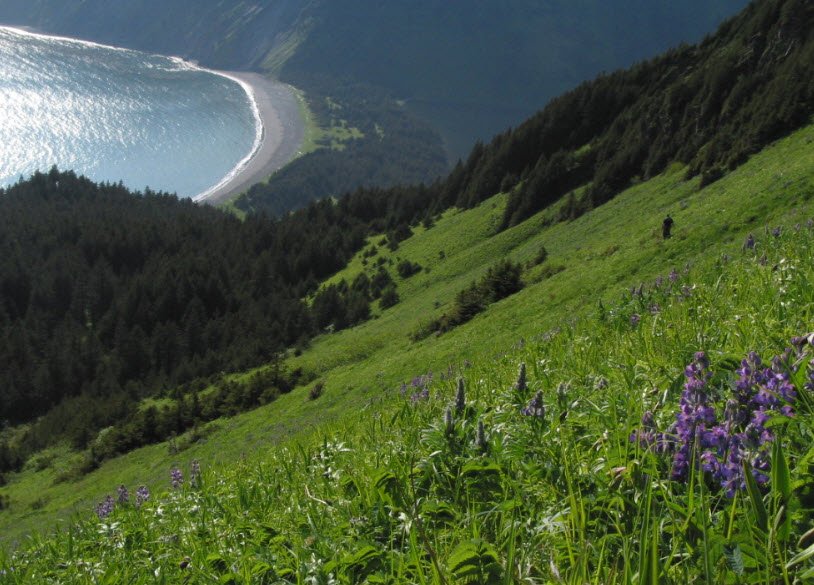
Afognak Island State Park spans 75,047 acres on Afognak Island northeast of Kodiak Island in Alaska's Kodiak Archipelago, featuring rugged mountains, old-growth Sitka spruce forests, grasslands, streams, lakes, and coastal bays like Perenosa, Seal, and Tonki.
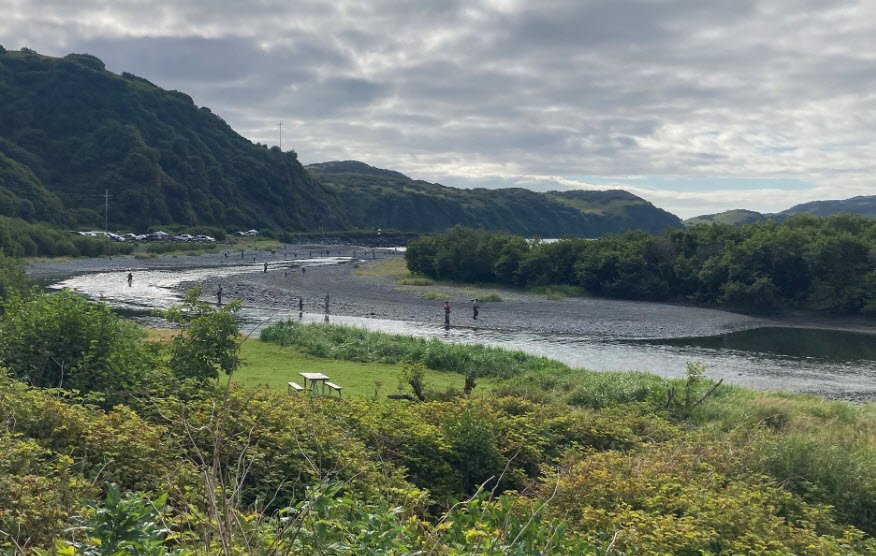
Pasagshak State Recreation Site, also known as Pasagshak River State Recreation Site, is a 21-acre coastal park at milepost 20 on Pasagshak Road, about an hour's drive southwest from Kodiak on Kodiak Island, Alaska, where the Pasagshak River meets Pasagshak Bay amid dramatic scenery.
The Aurora Ice Museum in Alaska, located at Chena Hot Springs Resort near Fairbanks, is home to the world’s largest year-round ice environment, created from over 1,000 tons of ice and snow.
Arctic Valley Ski Area in Alaska, opened in 1949 and operated by the Anchorage Ski Club founded in 1937, is a non-profit ski resort located within 20 miles of Anchorage, in Chugach State Park.
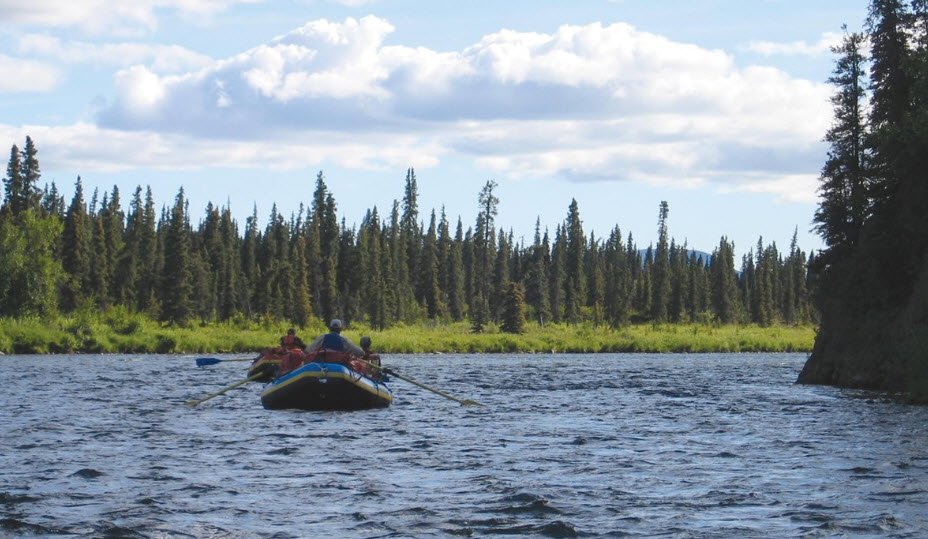
The Alagnak River is a 64-mile-long free-flowing river located in southwestern Alaska, flowing from Kukaklek Lake in Katmai National Park and Preserve to the Kvichak River near Bristol Bay.
The Tongass National Forest in Southeast Alaska is the largest national forest in the United States, spanning about 17 million acres and covering most of the Alaska Panhandle.
Fountainhead Antique Auto Museum is a celebrated museum located within the Wedgewood Resort in Fairbanks, Alaska, dedicated to preserving and showcasing early automotive history.
The Mount Roberts Tramway, also known as the Goldbelt Tram, is an aerial cable tramway located near downtown Juneau, Alaska, that transports visitors 1,800 feet up Mount Roberts in a six-minute ride.
Hilltop Ski Area is a small, community-focused ski resort located within Far North Bicentennial Park near Anchorage, Alaska, just 12 miles from Ted Stevens Anchorage International Airport.
Chilkat Islands State Marine Park encompasses a 6,560-acre chain of four pristine islands—Kataguni, Shikosi, Anyaka, and Talsani—in Lynn Canal north of Juneau, Alaska, accessible primarily by kayak or small boat due to rocky shores and high winds.
The Alaska Wildlife Conservation Center (AWCC), located at Mile 79 of the Seward Highway near Portage in Southcentral Alaska, is a 200-acre non-profit sanctuary dedicated to conserving, researching, educating about, and caring for Alaska’s native wildlife.
Wood-Tikchik State Park, located in southwest Alaska north of Dillingham, is the largest state park in the United States, spanning nearly 1.6 million acres of pristine wilderness.
The Alaska State Museum in Juneau showcases over 32,000 artifacts representing the diverse cultures and rich history of Alaska, including significant collections of Alaska Native material from groups such as the Tlingit, Haida, Athabascan, Inupiaq, Yup'ik, Alutiiq, and Unangax.
Cape Krusenstern National Monument in northwest Alaska protects a 660,000-acre coastal plain featuring over 100 beach ridges formed by wind and water that provide a detailed 4,500-year archaeological record of prehistoric human use.
Boswell Bay Beaches State Marine Park covers 3,047 acres on the eastern tip of Hinchinbrook Island in Prince William Sound near Cordova, Alaska, showcasing rare sandy beaches exposed to the Gulf of Alaska's high-energy waves alongside evidence of the 1964 earthquake that shifted the shoreline inland by over a mile with gradual vegetation recovery.