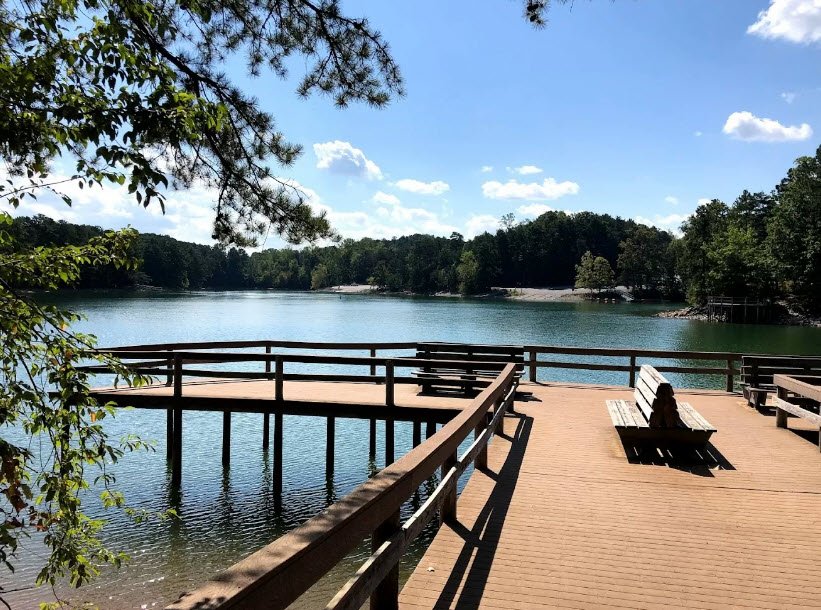
Lake Lanier, a massive reservoir in northern Georgia spanning 38,000 acres across 10 counties, was created in the 1950s by the U.S. Army Corps of Engineers through the Buford Dam on the Chattahoochee River, primarily for flood control, hydroelectric power, navigation, and water supply to metro Atlanta.
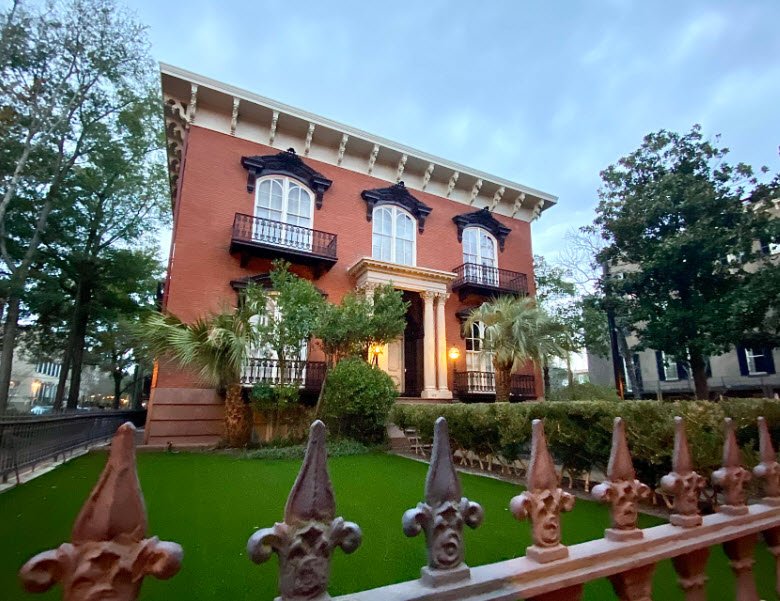
Mercer Williams House Museum in Savannah, Georgia, stands as an Italianate mansion designed in 1860 by architect John S. Norris for General Hugh W. Mercer but completed in 1868 by cotton merchant John Wilder after Civil War delays, with no Mercer family ever residing there.
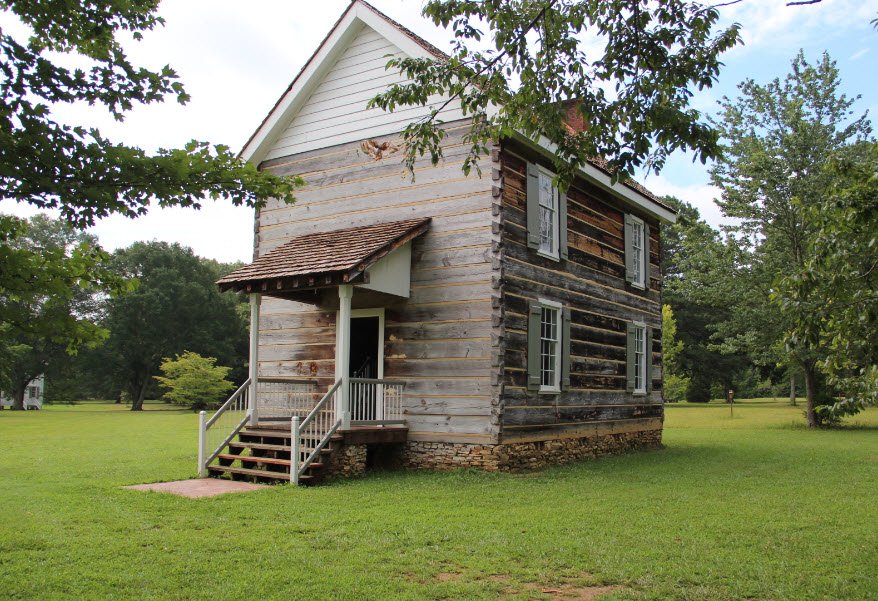
New Echota State Historic Site in Calhoun, Georgia, USA, preserves the capital of the Cherokee Nation from 1825 to 1838, where the tribe established a constitutional government modeled after the United States, printed the first Native American newspaper Cherokee Phoenix, and convened courts that reached the U.S. Supreme Court.
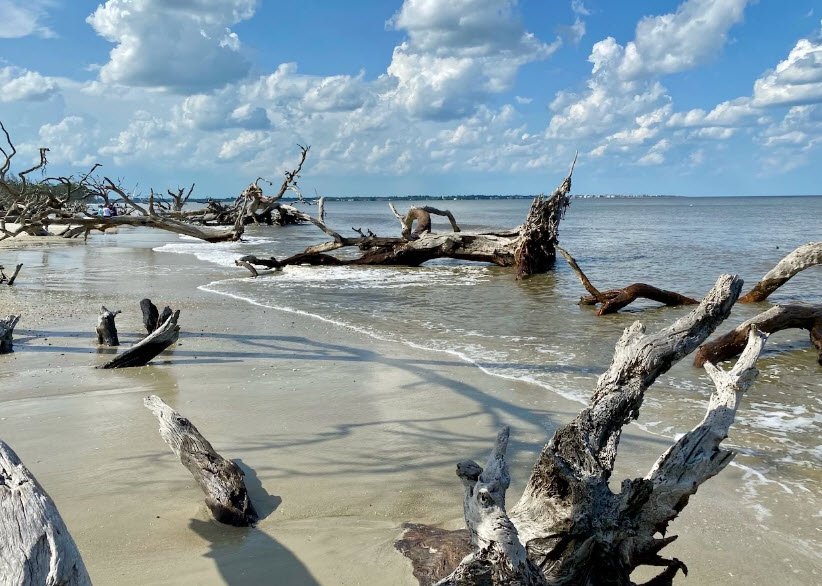
Driftwood Beach on Jekyll Island, Georgia, captivates visitors with its surreal landscape of massive, weathered oak trees sculpted by decades of erosion from storms and tides, transforming a former maritime forest into a skeletal tree graveyard scattered across golden sands.
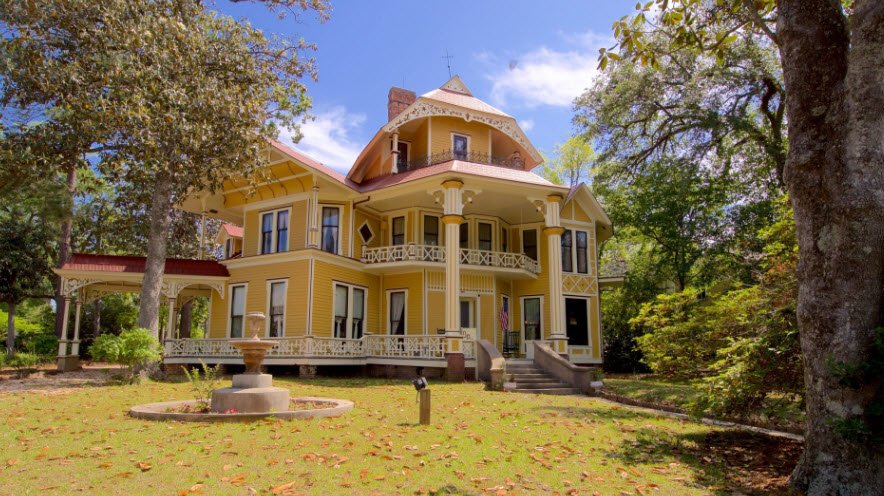
Lapham-Patterson House Historic Site in Thomasville, Georgia, USA, showcases a strikingly unconventional Victorian-era home built in 1884-1885 as a winter cottage for Chicago shoe merchant C.W. Lapham, designed by Danish architect Tudor Rommerdall and celebrated for its deliberate asymmetry with no square windows, doors, or rooms.
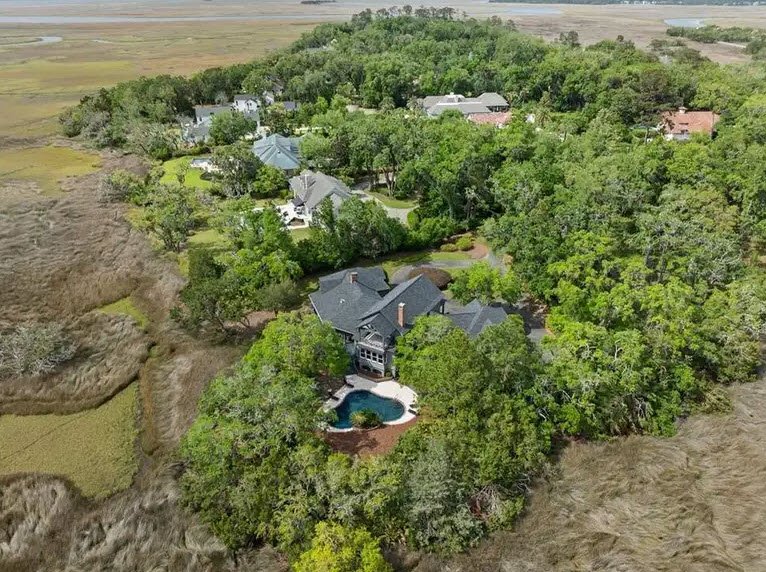
St. Simons Island, Georgia, is the largest barrier island in the Golden Isles chain, located in Glynn County along the southeast Atlantic coast midway between Savannah and Jacksonville, covering about 18 square miles with 10% water amid marshes, beaches, and maritime forests.
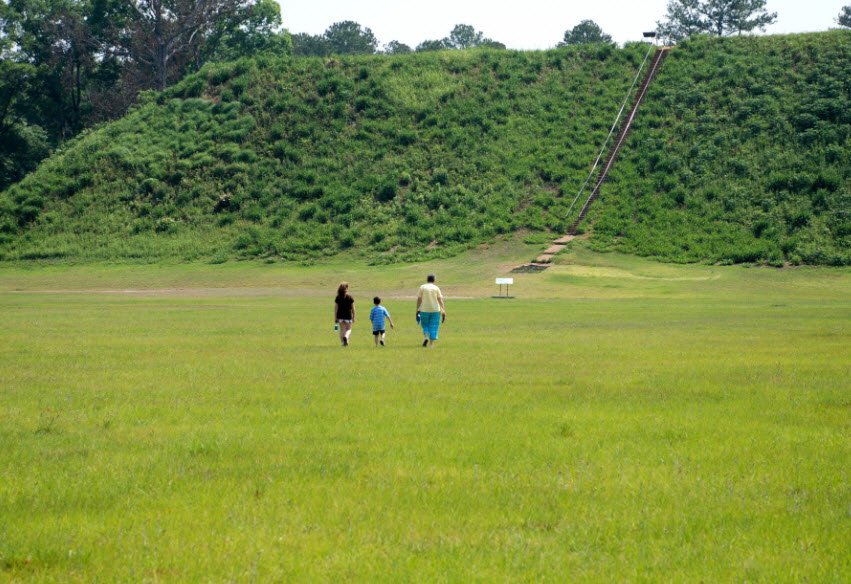
Kolomoki Mounds State Park in southwest Georgia near Blakely, USA, protects 1,293 acres around one of North America's largest and oldest Woodland period mound complexes, built by Swift Creek and Weeden Island peoples from 350-900 CE as a major ceremonial center with villages and a plaza.
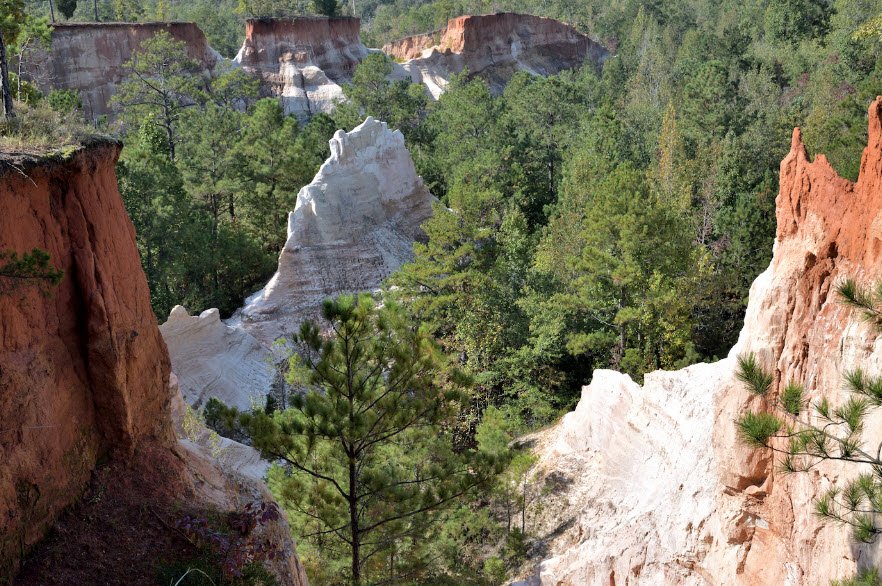
Providence Canyon State Park in Lumpkin, Georgia, known as Georgia's Little Grand Canyon, features dramatic gullies up to 150 feet deep with vibrant multicolored soil layers formed primarily by poor 19th-century farming practices that eroded farmland after forest clearing and intensive cotton cultivation by early settlers.
Vogel State Park, one of Georgia's oldest established in 1931 at the base of Blood Mountain in the Chattahoochee National Forest, spans 233 acres at about 2,500 feet elevation for cooler summers and stunning fall foliage.
Chief Vann House Historic Site in Chatsworth, Murray County, Georgia, USA, preserves the first brick mansion in the Cherokee Nation, built between 1804 and 1806 by wealthy leader James Vann as the Showplace of the Cherokee Nation on his 1,000-acre Spring Place plantation.
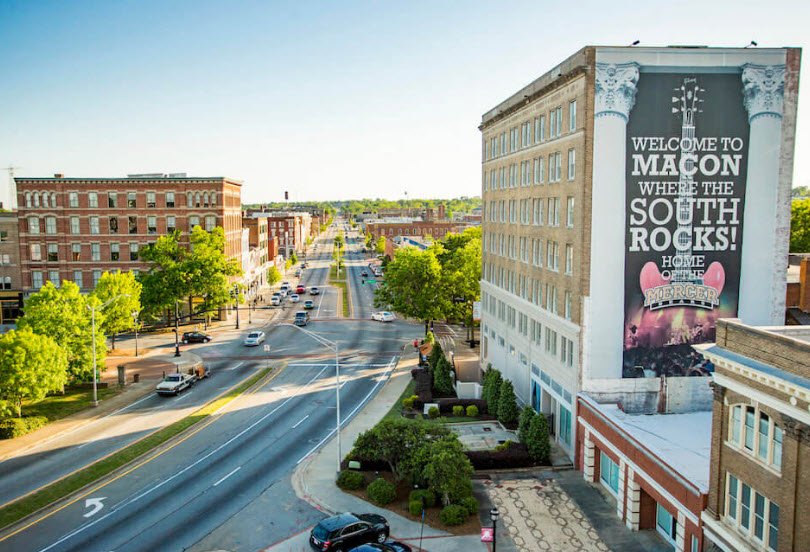
Macon, Georgia, sits at the fall line of the Ocmulgee River in central Bibb County, founded in 1823 around historic Fort Hawkins as a key trading post and military outpost established in 1806 under President Thomas Jefferson.
Historic Watson Mill Bridge State Park, near Comer in northeast Georgia, USA, spans 1,018 acres along the South Fork of the Broad River and centers around Georgia's longest covered bridge at 229 feet, built in 1885 by Washington W. King using a Town lattice truss system fastened with wooden pegs.
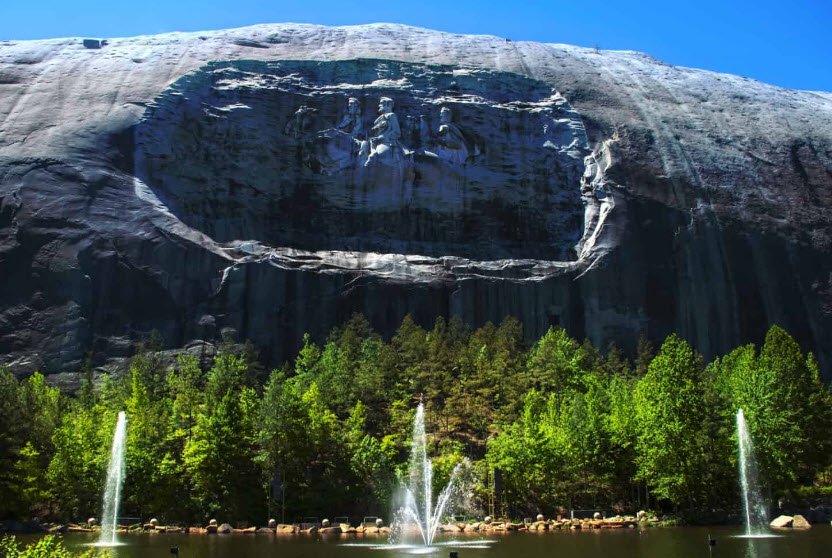
Stone Mountain Park in DeKalb County, Georgia, encompasses 3,200 acres around the massive quartz monzonite dome rising 825 feet, acquired by the state in 1958 as a Confederate memorial and opened to the public in 1965 as Georgia's most-visited attraction.
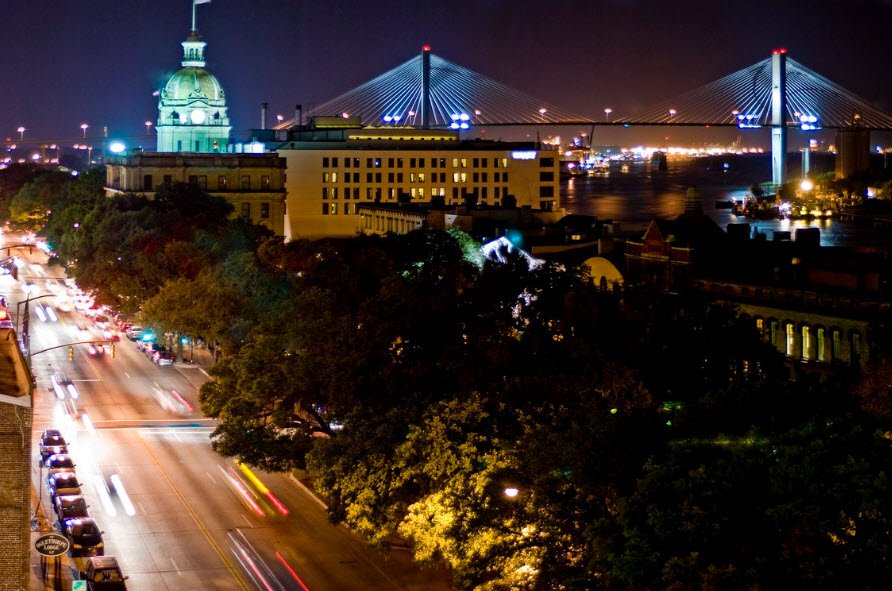
Savannah Historic District in Savannah, Georgia, is the largest National Historic Landmark District in the United States, spanning 2.5 square miles with over 20 moss-draped public squares, cobblestone streets, and architecture from the 18th and 19th centuries.
World of Coca-Cola in Atlanta, Georgia, is an interactive museum celebrating the history of the iconic beverage brand since its invention by pharmacist John S. Pemberton in 1886.
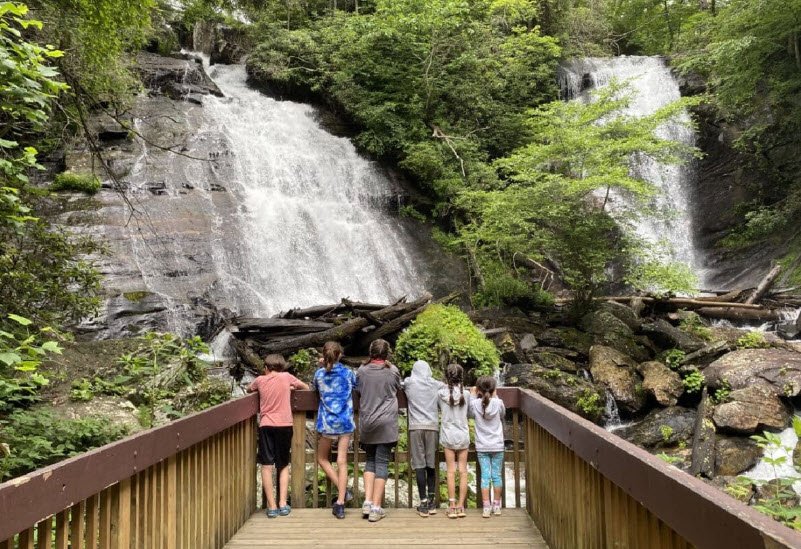
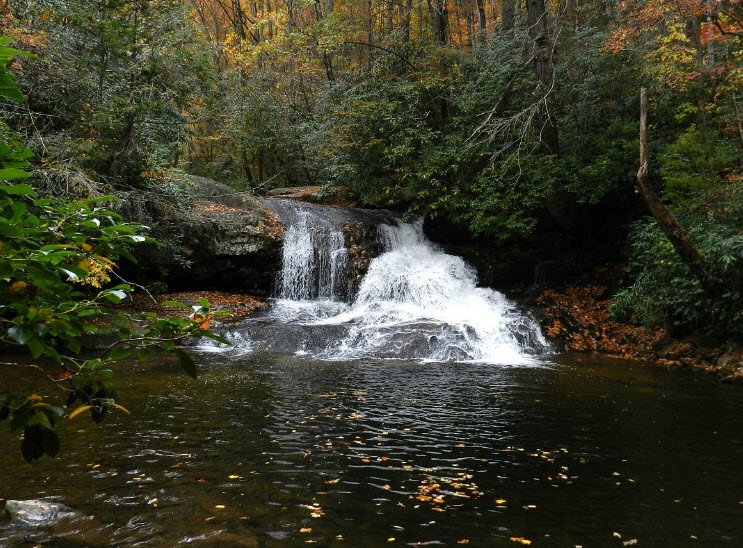
Anna Ruby Falls in Helen, Georgia, is a striking twin waterfall in the Chattahoochee National Forest, formed by Curtis Creek dropping 153 feet and York Creek cascading 50 feet to merge into Smith Creek at Tray Mountain's base.
National Center for Civil and Human Rights in Atlanta, Georgia, opened in 2014 as a nonprofit cultural institution near the Georgia Aquarium, envisioned by civil rights leaders like Evelyn Lowery, Andrew Young, and John Lewis to bridge the American Civil Rights Movement with global human rights struggles.
Moccasin Creek State Park, Georgia's smallest at 32 acres, sits on the western shore of 2,775-acre Lake Burton in Rabun County within the Chattahoochee-Oconee National Forest.